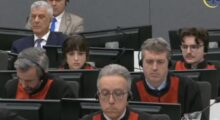
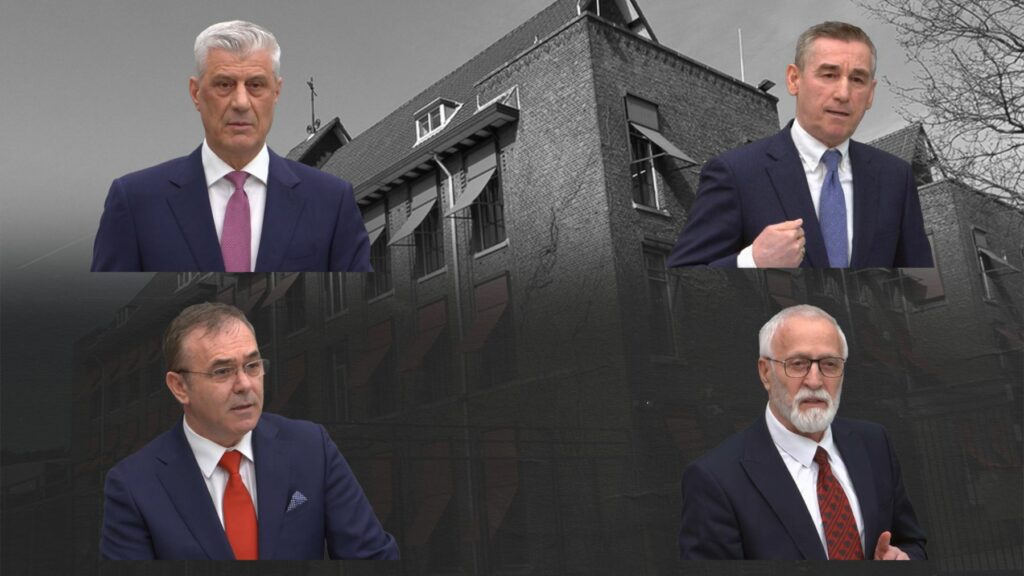
 Hashim Thaci (upper left), Kadri Veseli (upper right), Rexhep Selimi (lower left), and Jakup Krasniqi (lower right) in court, February 18, 2026. Photos: Kosovo Specialist Chambers livestream. Montage: BIRN
At the close of their trial in The Hague, the four former Kosovo Liberation Army leaders insisted on their innocence and voiced pride in what they recalled as a people's just struggle for freedom.
The three-year war crimes and crimes against humanity trial of former Kosovo President Hashim Thaci, former parliament speakers Kadri Veseli and Jakup Krasniqi, and former MP Rexhep Selimi ended on Wednesday at the Kosovo Specialist Chambers in The Hague.
The four senior wartime officials of the Kosovo Liberation Army, KLA, addressed the court at the end of their lawyers’ closing statements. One after the other, they emphasised their innocence and that their involvement in the armed struggle of Kosovo Albanians for freedom i the 1998-99 war was just.
Thaci said that “there is only one truth: the charges do not stand. I am completely innocent.” He added that “I sympathise and express regret for all the victims who have suffered in Kosovo, regardless of their ethnic background.”
Thaci, Veseli, Krasniqi, and Selimi are accused of having individual and command responsibility for crimes committed against prisoners held at KLA detention facilities in Kosovo and neighbouring Albania, and of waging a systemic campaign against “opponents”, including 102 murders.
The prosecution says these “opponents” were people that the KLA deemed to be “collaborating or associating” with Yugoslav forces, officials or state institutions, including Serbian police, and people who did not support the aims and methods of the guerrillas or the Provisional Government of Kosovo, which Thaci headed from March 1999, while also KLA commander-in-chief.
Thaci told the court that, “at the beginning of 1998, I was a student at the University of Zurich. I was not making plans to take control of Kosovo. The only person making plans, morbid plans, was [Yugoslav President] Slobodan Milosevic.
“I could not stand aside while my family and my people were facing extermination. I did what each of you would have done if your country, your people, were experiencing what my people experienced,” he said, explaining why he eventually returned to Kosovo. Thaci told the court that he did not bring war to Kosovo but joined a liberation movement.
Veseli said that “the court must, at all costs, uphold justice, truth and impartiality. This is not just a legal obligation, it is its great contribution and the legacy that will remain from this court. This is also the reason why I joined those thousands of women and men who lined up in the ranks of the Kosovo Liberation Army, for the freedom of Kosovo.
“Freedom cannot be achieved through injustice. Nor can peace be built on crime. A just cause cannot be defended by unjust means,” Veseli said, recalling that “my family and I have lived under constant persecution by the Serbian state” and he had not violated the law.
“My actions have been humane and legal. My conscience is clear. My history is transparent,” he said, adding that “it has not been proven that I have committed any illegal act on my part.”
In his final speech to the court, Selimi said he hoped “that the trial panel has had sufficient time to understand that our war was just and that the prosecution’s claims do not stand.
“The charges against us are entirely unfounded and unjust. I am not standing here today to defend myself, because my lawyers know how to do that best and have done so. I am not here to explain justice to you, either, because you know it better than anyone. I am here today to ask you to exercise it – justice.”
Selimi said that “the time when I will return to Kosovo depends on your decision. But the prosecution should have understood that whenever I return, I will return to a free Kosovo, a Kosovo that I am proud that I stood up for at the right time, and for whose freedom I have been and am ready to give my life, whenever it is necessary.”
Krasniqi, who was a political prisoner for around a decade under the Yugoslav regime in the 1980s, told the court: “I am in my 16th year of imprisonment just because I fought for the freedom and independence of my people”.
“To have spent 16 out of 75 years of my life in prison and to be deprived of the air of freedom is not a small thing,” he said.
In his address, Krasniqi declared: “The injustice of this case is written in the indictment itself.”
He continued: “Our people never planned destruction or torture. We sought life in freedom and independence. Nothing more. Nothing less. Today our people live in freedom.”
Krasniqi’s statement marked the end of the trial. The judges should decide on a verdict within 90 days.
The Specialist Chambers, established under pressure from the West, are part of Kosovo’s justice system but based in The Hague with an international staff to ensure fair proceedings, after witness intimidation in previous KLA-related cases.
Many prosecution witnesses have testified behind closed doors to protect their identities due to fears of reprisals, but this has led to allegations of a lack of transparency. Parts of the closing statements that started on February 9 were also held in private session.
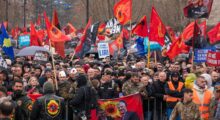
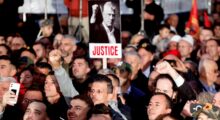
Ethnic Albanians consider the court biased against the Kosovo Albanians’ just war against Serbian oppression. KLA veterans and supporters have protested in support of the four accused in Pristina, Tirana, Skopje, The Hague and Strasbourg. The latest protest saw thousands of ethnic Albanians rally in the main square in Pristina on Kosovo’s independence day on February 17.


18 February 2026 - 19:01

At the close of their trial in The Hague, the four former Kosovo Liber...

On the 18th anniversary of the independence of Kosovo, thousands of ci...

The defence for the four former Kosovo Liberation Army leaders said in...

MPs in both Kosovo and Albania on Thursday adopted declarations in sup...